
Turkmenistan Agricultural Exports: Sector Overview and B2B Opportunities
Turkmenistan’s agricultural sector stands as one of the most strategically important pillars of the national economy. As the government continues to advance diversification programmes and expand non-hydrocarbon revenue streams, Turkmenistan agricultural exports are receiving substantial state investment, modernisation support, and international positioning. For B2B buyers, importers, and trade intermediaries, the sector offers a compelling combination of volume, product variety, and competitive pricing.
According to the Food and Agriculture Organization of the United Nations (FAO), Turkmenistan’s irrigated agriculture benefits from the Amu Darya river basin, one of Central Asia’s most productive agricultural zones, providing a reliable natural foundation for consistent export volumes.
Key Agricultural Products Exported from Turkmenistan
The export profile of Turkmenistan’s agricultural sector is broad and continues to be refined through state agro-industrial programmes. The following product categories represent the most commercially significant for international B2B trade:
Cotton and Cotton Fibre
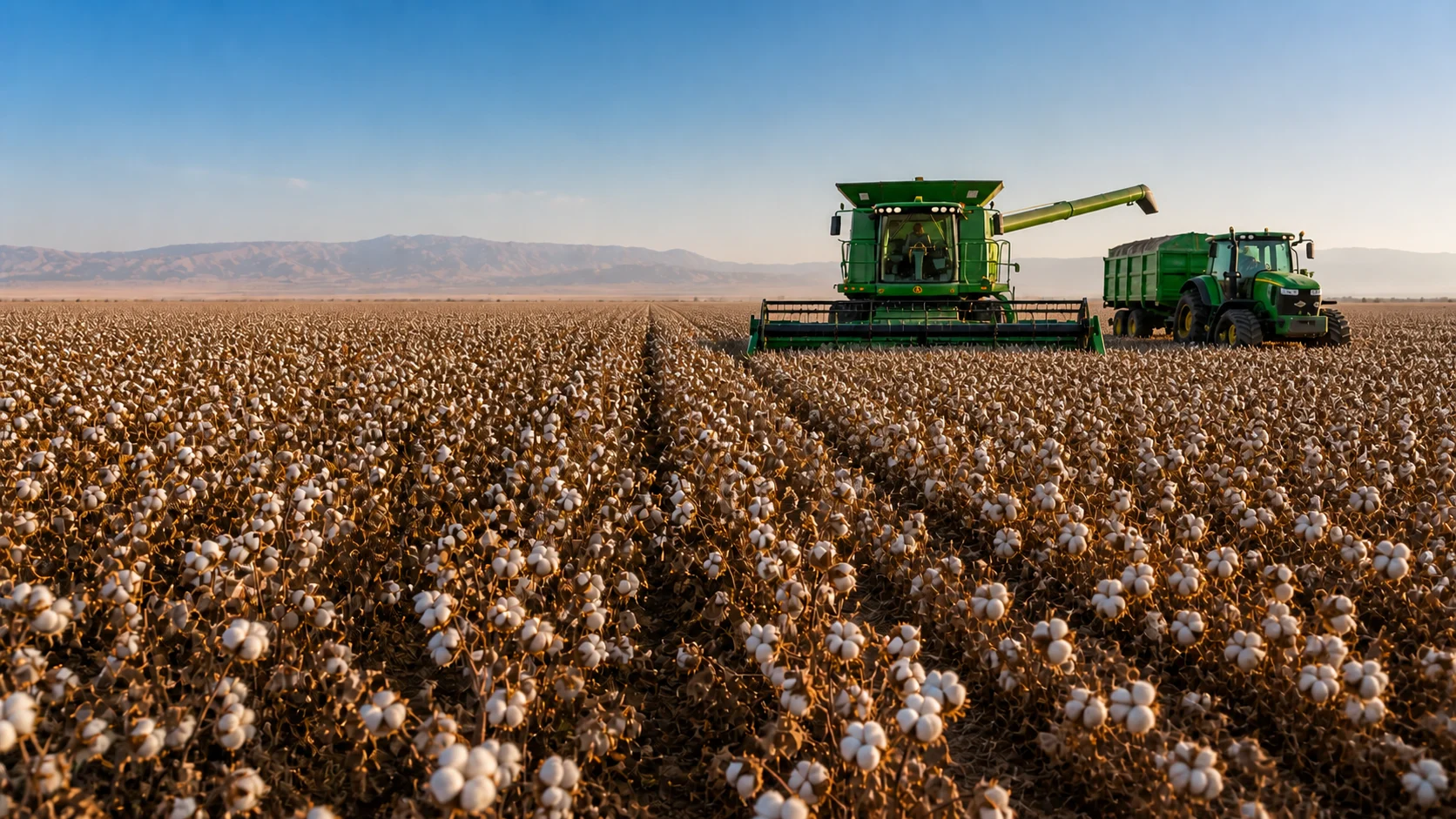
Cotton has historically been a flagship Turkmenistan agricultural export. The country is among the top cotton producers in the CIS region.
- The industry is moving from cotton fiber exports to the development of processing facilities and the sale of textile products in foreign markets.
- Cotton products and yarn are exported primarily to textile processing countries in Asia and Europe.
- Government-supported improvements in gin processing have improved the quality of fiber and processed products.
- Buyers benefit from government-stabilised supply chains and consistent seasonal volumes.
Wheat and Grain Products
Turkmenistan is a net wheat exporter, with domestic grain production exceeding internal consumption requirements in key harvest years.
- The government’s grain independence programme has substantially increased cultivated area.
- Wheat exports move primarily through Afghan and Iranian border corridors, as well as Caspian Sea transit routes.
- B2B opportunity: Regional buyers in South Asia and the Middle East represent a natural growth market.
Fresh and Processed Fruits and Vegetables
The Turkmen climate — characterised by long, hot summers and mineral-rich soils — is well-suited to high-quality horticulture.
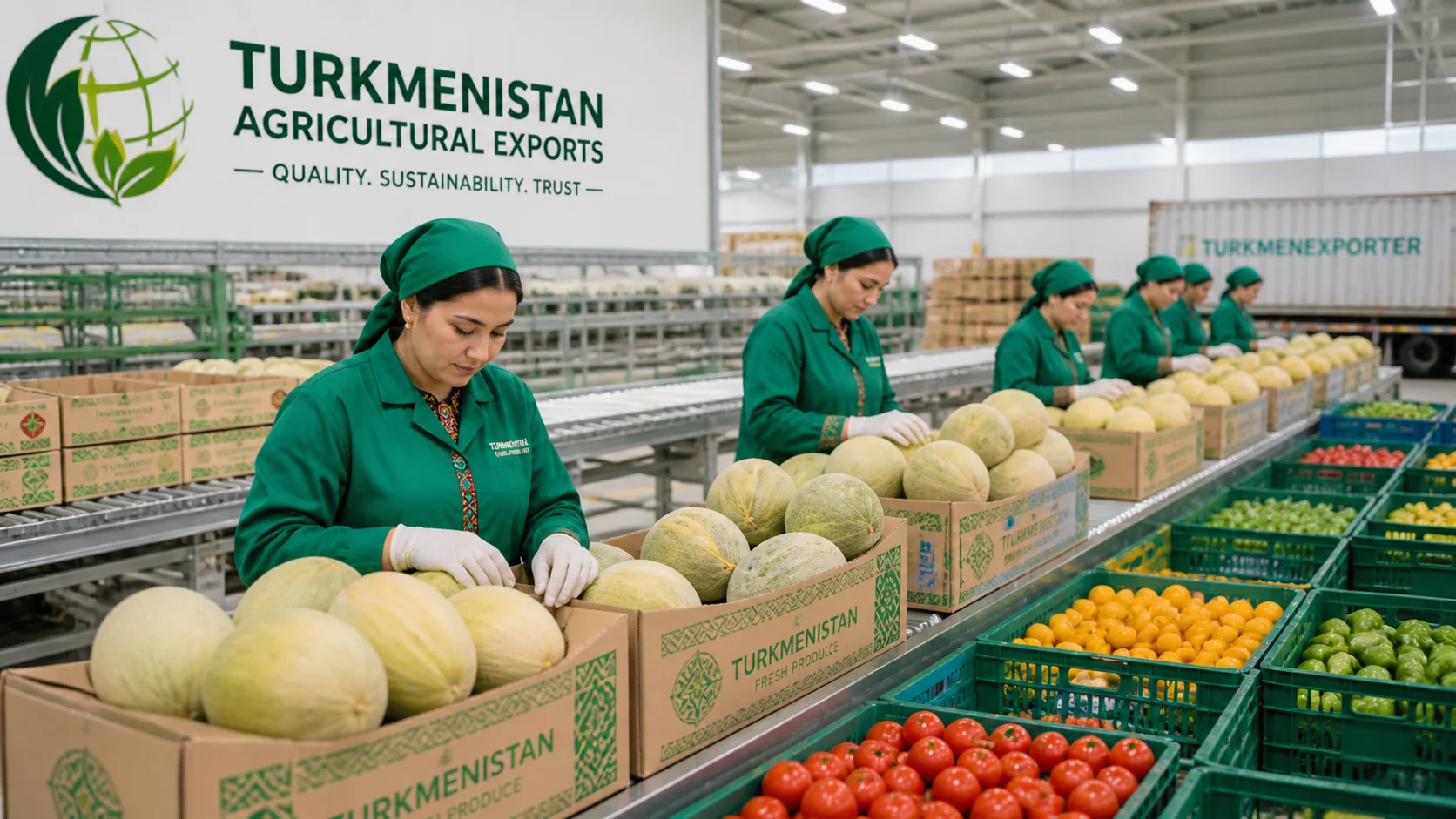
- The main export products are greenhouse fresh tomatoes, melons, strawberries, grapes, onions, garlic, premium quality mushrooms, bell peppers. Oatmeal and sesame seeds are also in demand in foreign markets, with shipments amounting to thousands of tons. In addition to its export potential, mash benefits agriculture: thanks to nitrogen-fixing nodules on the roots, it enriches the soil with ionized nitrogen, creating an excellent base for future crops.
- Cooling infrastructure and logistics along the Trans-Caspian route are actively being upgraded.
Animal Products
- Karakul sheep wool and pelts represent a niche but premium export product, particularly valued in European fashion supply chains.
- The export of chicken eggs to neighboring countries and the Persian Gulf is growing.
Agricultural Practices and Sustainability Initiatives
Turkmenistan’s leadership has placed sustainable agricultural development at the centre of its long-term economic agenda. Key state-driven sustainability initiatives include:
- Water Management Reform: Transition from open canal irrigation toward drip and sprinkler systems across priority agricultural zones, reducing water consumption per hectare.
- Crop Rotation Programmes: State agronomic guidance promotes multi-crop rotation to preserve soil fertility and reduce chemical input dependency.
- Organic Pilot Zones: Selected districts in the Ahal and Mary velayats are piloting reduced-pesticide cultivation for export-grade produce.
- Agro-park Development: Government-sponsored agro-industrial parks cluster processing, packaging, and cold-chain facilities, improving the export readiness of perishable goods.
These initiatives align with the UN Sustainable Development Goals framework and position Turkmen exporters competitively in markets where buyers prioritise supply chain sustainability documentation.
Major Agricultural Export Partners
Turkmenistan’s agricultural export geography is strategically diversified:
| Region / Country | Key Products |
|---|---|
| CIS | Cotton fiber, fresh food, carbonated drinks and juices, confectionery |
| Afghanistan | Vegetables, carbonated drinks and juices, confectionery |
| China | Cotton fibre, raw agricultural commodities, carbonated drinks and juices, confectionery |
| Gulf States (UAE, Oman) | Fresh melons, vegetables, carbonated drinks and juices, confectionery |
| EU | Karakul wool, premium dried fruit, carbonated drinks and juices, confectionery |
| Turkey | Karakul wool, premium dried fruit, carbonated drinks and juices, confectionery |
The country’s geographic position — at the crossroads of Central Asia, the Caspian, and the Middle East — means that Turkmenistan agricultural exports benefit from multiple active trade corridors, reducing dependency on any single route or partner.
Future Perspectives for Agricultural Exports
The trajectory for Turkmenistan agricultural exports through 2025–2030 is shaped by several reinforcing factors:
- State Investment in Agro-Processing: The government is actively funding food processing plants to shift exports from raw commodities toward higher-value processed products (juices, canned goods, dried fruit, cotton yarn).
- Digital Customs Modernisation: Digitalization of customs procedures and certification makes it possible to systematically reduce the processing time for perishable products. This contributes to the development of the “green corridors” system, which ensures the fastest possible delivery of goods.
- Halal Certification Push: Alignment with international Halal standards opens significant B2B volume in GCC, Southeast Asian, and Turkish markets.
- EAEU Integration Advantages: Turkmenistan’s deepening cooperation with Eurasian Economic Union member states provides preferential trade channels for grain and textile raw materials.
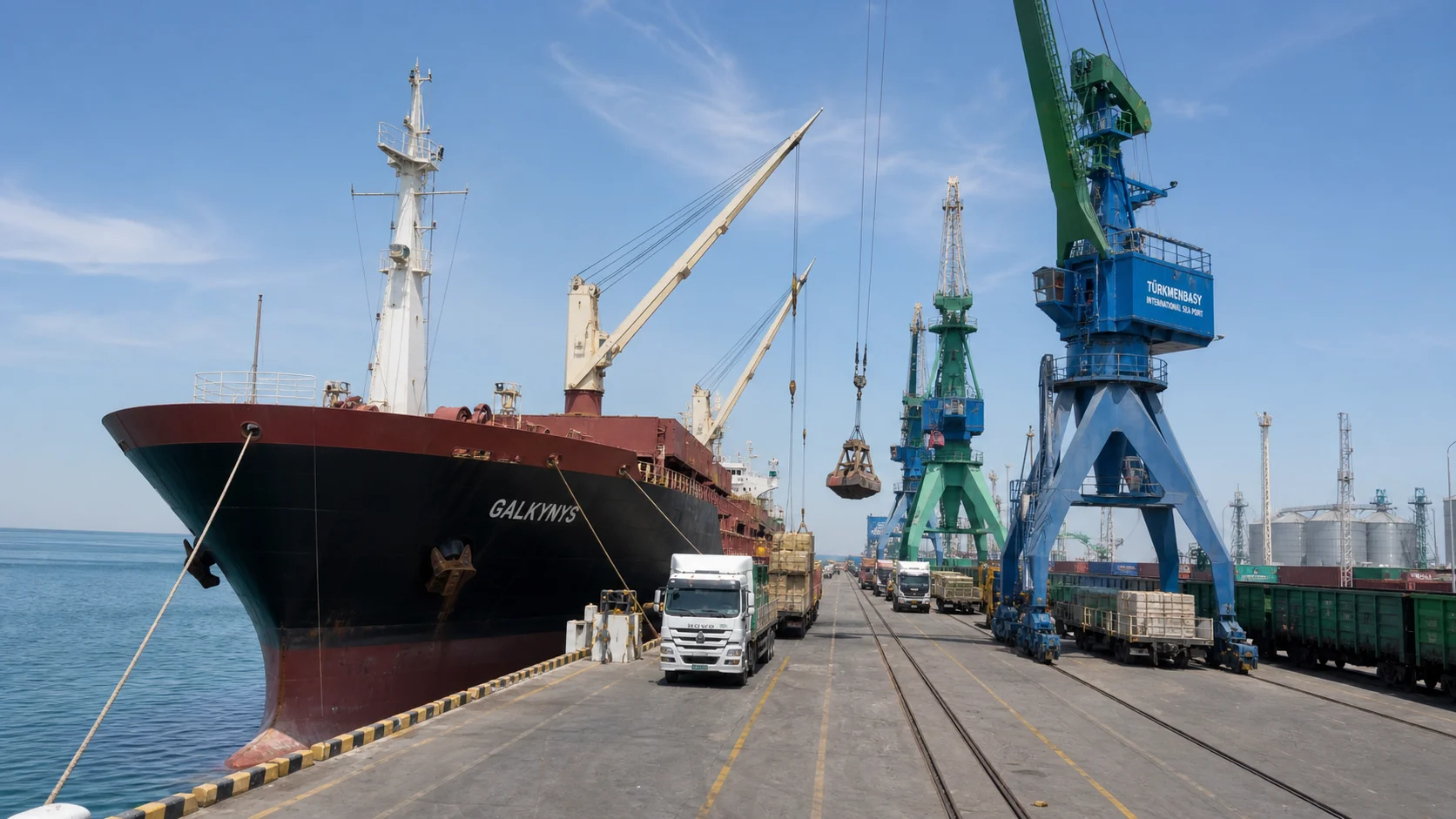
- Infrastructure Expansion: The Turkmenistan–Afghanistan–Pakistan–India (TAPI) corridor and upgraded Caspian port facilities at Turkmenbashi broaden reach for agro-commodity shipments westward and southward.
For B2B buyers and sourcing managers, now represents a strategically relevant moment to establish direct supplier relationships with Turkmen agro-exporters.