

Turkmenistan Textile Exports: Inside One of Central Asia’s Most Dynamic Industries
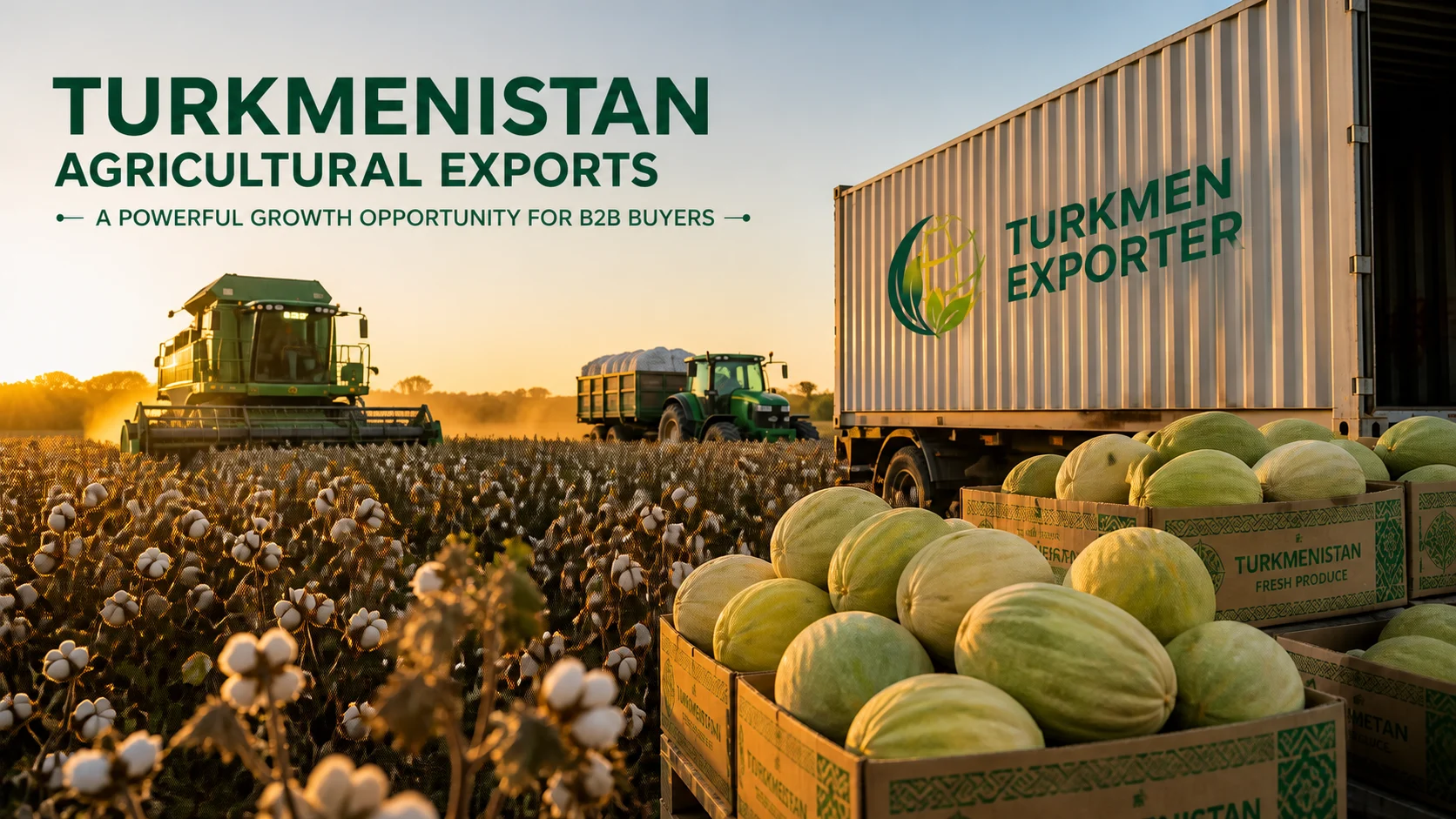
Turkmenistan’s textile sector stands as one of the most strategically developed pillars of the national economy. Backed by state investment programs, vertically integrated production facilities, and a world-class raw material base — anchored in the country’s renowned cotton cultivation heritage — Turkmenistan textile exports have evolved from a regional footnote into a competitive force on the global B2B stage.
For international buyers, sourcing agents, and trade partners, understanding this sector in depth is essential to unlocking meaningful procurement opportunities in Central Asia.
Overview of the Textile Industry in Turkmenistan
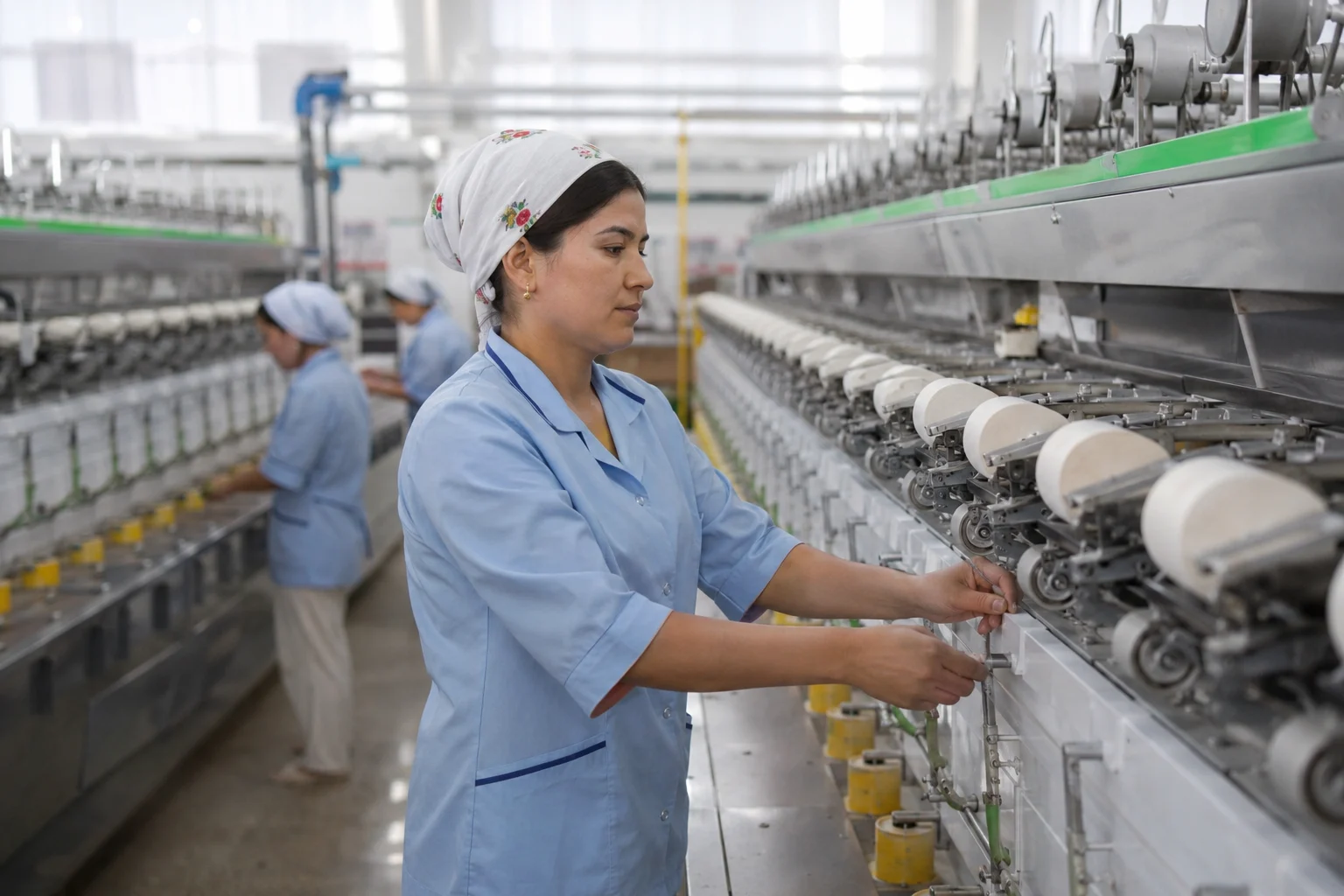
The Turkmen textile industry is not a recent development — it draws on decades of manufacturing tradition anchored in the country’s cotton-growing capacity and skilled labour force. However, the sector has undergone a profound structural transformation over the past two decades, shifting from raw fibre export toward high-value finished goods.
Key structural features of the industry today include:
- Vertical integration: From cotton field to finished garment, many facilities operate full production cycles, reducing dependency on third-party processing.
- State modernisation programs: Government-backed investment has equipped numerous enterprises with European and Asian machinery, enabling compliance with international quality benchmarks.
- Geographic concentration: Major textile clusters are located in Ashgabat, Mary, Türkmenabat, and Türkmenbaşy, each benefiting from proximity to raw material sources and logistics corridors.
- Workforce scale: The industry employs tens of thousands of workers, and ongoing professional training programs ensure a steady pipeline of skilled textile operators and quality control specialists.
According to data tracked by the World Trade Organization, developing economies with vertically integrated textile sectors consistently achieve stronger export value retention — a model Turkmenistan has actively pursued.
Primary Textile Products Exported from Turkmenistan
Turkmenistan’s export catalogue in this sector is both broad and refined. B2B buyers will find a competitive range of product categories suitable for retail sourcing, industrial procurement, and private-label partnerships.
Cotton Yarn and Thread
Raw and processed cotton yarn remains one of the highest-volume export items. Turkmen cotton — prized for its long-staple fibre — produces yarn with exceptional tensile strength and absorbency, making it highly sought after by textile manufacturers in Turkey, China, and EU markets.
- Ring-spun and open-end yarn variants available
- Counts ranging from Ne 10 to Ne 40+
- Natural and bleached finishes
Woven and Knitted Fabrics
Finished fabric exports have grown significantly as domestic mills invest in wider-width looms and precision dyeing infrastructure.
- Poplin, twill, canvas, and jersey fabrics for apparel applications
- Technical fabrics for workwear and industrial use
- Greige and finished fabric options for converter markets
Ready-Made Garments (RMG)
The ready-made garment segment represents the highest value-added layer of Turkmenistan’s textile export pyramid. Factories produce:
- Casual and formal apparel under private-label arrangements
- Workwear and uniforms for corporate and institutional buyers
- Childrenswear, sportswear, and innerwear collections
Home Textiles
Beyond apparel, Turkmenistan exports a growing volume of home textile products, including:
- Bed linen and towelling
- Table and kitchen textiles
- Decorative and functional household fabrics
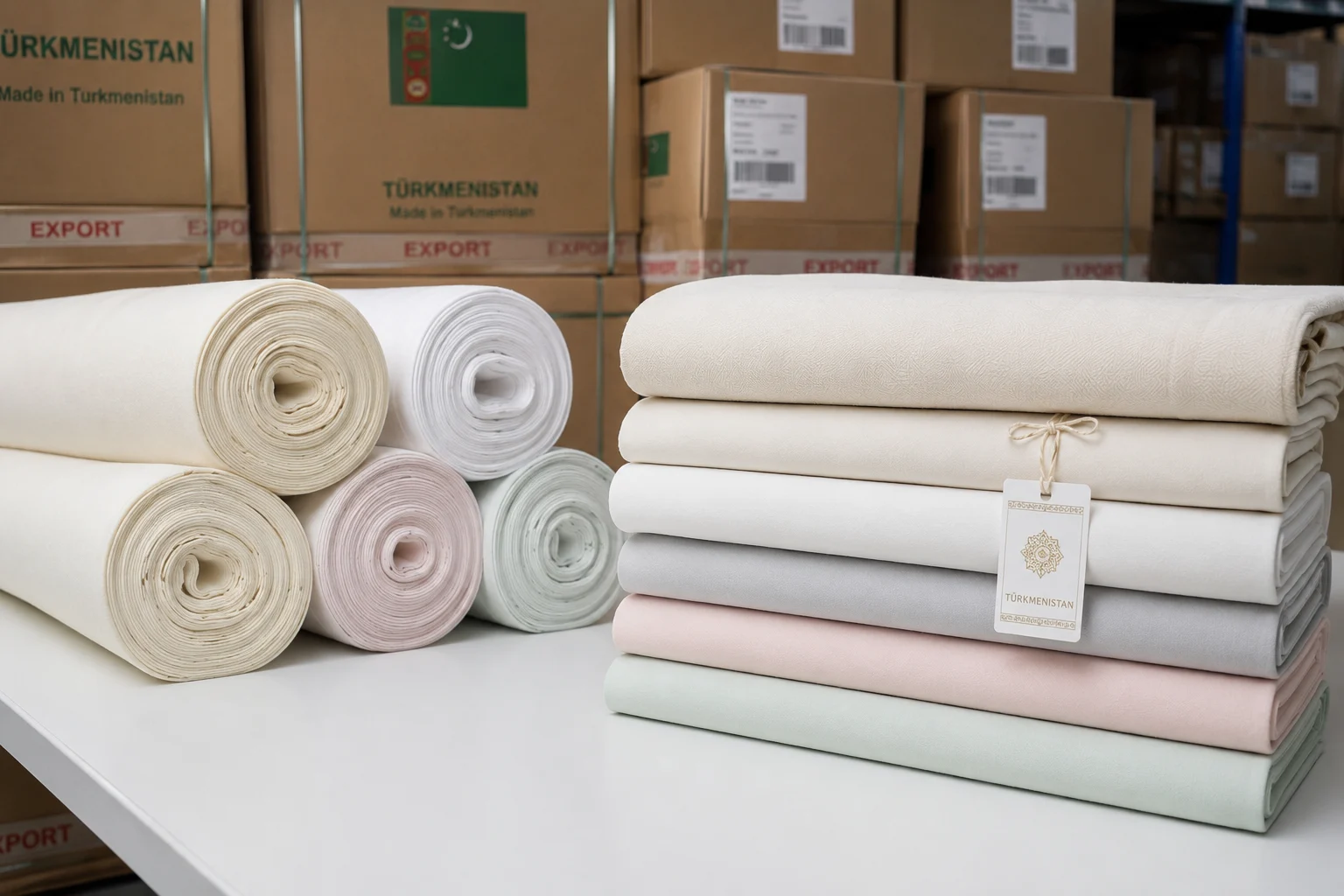
Textile Production Processes and Quality Standards
One of the distinguishing features of Turkmenistan’s export-oriented textile facilities is their commitment to standardised, auditable production processes. This is increasingly critical for B2B buyers operating under ESG and supply chain transparency requirements.
Raw Material Sourcing
The foundational input is domestically grown cotton, harvested across the country’s agriculturally productive regions. The integration of domestic raw material sourcing into the supply chain provides exporters with:
- Price stability relative to commodity market volatility
- Shorter lead times on fibre-to-fabric conversion
- A traceable, single-country supply chain narrative for compliance-conscious buyers
Spinning and Weaving
Modern spinning mills operate ring-spinning and rotor-spinning technologies sourced from leading machinery manufacturers in Germany, Switzerland, and Japan. Weaving operations increasingly employ rapier and air-jet looms, enabling higher-precision fabric construction.
Dyeing, Finishing, and Quality Control
Textile enterprises have systematically upgraded their wet-processing capabilities:
- Reactive and vat dyeing for colour-fast apparel fabrics
- Sanforizing, mercerising, and calendering finishing lines
- In-house quality laboratories conducting tensile strength, colorfastness, and shrinkage testing
Enterprises aligned with ISO 9001 quality management standards are increasingly prevalent, supporting Turkmenistan’s positioning as a reliable, audit-ready sourcing destination.
Textile Export Partners and Trade Routes
Turkmenistan textile exports flow along several established and emerging trade corridors, reflecting both geographic logic and bilateral trade agreement structures.
Established Markets
| Region | Key Countries | Primary Products |
|---|---|---|
| CIS | Belarus, Kazakhstan | Yarn, fabrics, garments |
| Middle East | UAE, Turkey | Cotton yarn, home textiles |
| East Asia | China | Raw fibre, grey fabrics |
| South Asia | Pakistan, India | Cotton yarn, semi-processed fabrics |
Emerging Markets
European buyers — particularly in Poland, the Czech Republic, and the Baltic states — have demonstrated growing interest in Turkmen textile products as part of supply chain diversification strategies. The country’s participation in regional economic frameworks creates structured pathways for expanding these relationships.
Logistics Infrastructure
Exports move via a combination of:
- Rail: The Trans-Caspian corridor and connections to the broader CIS rail network
- Road: Cross-border freight routes
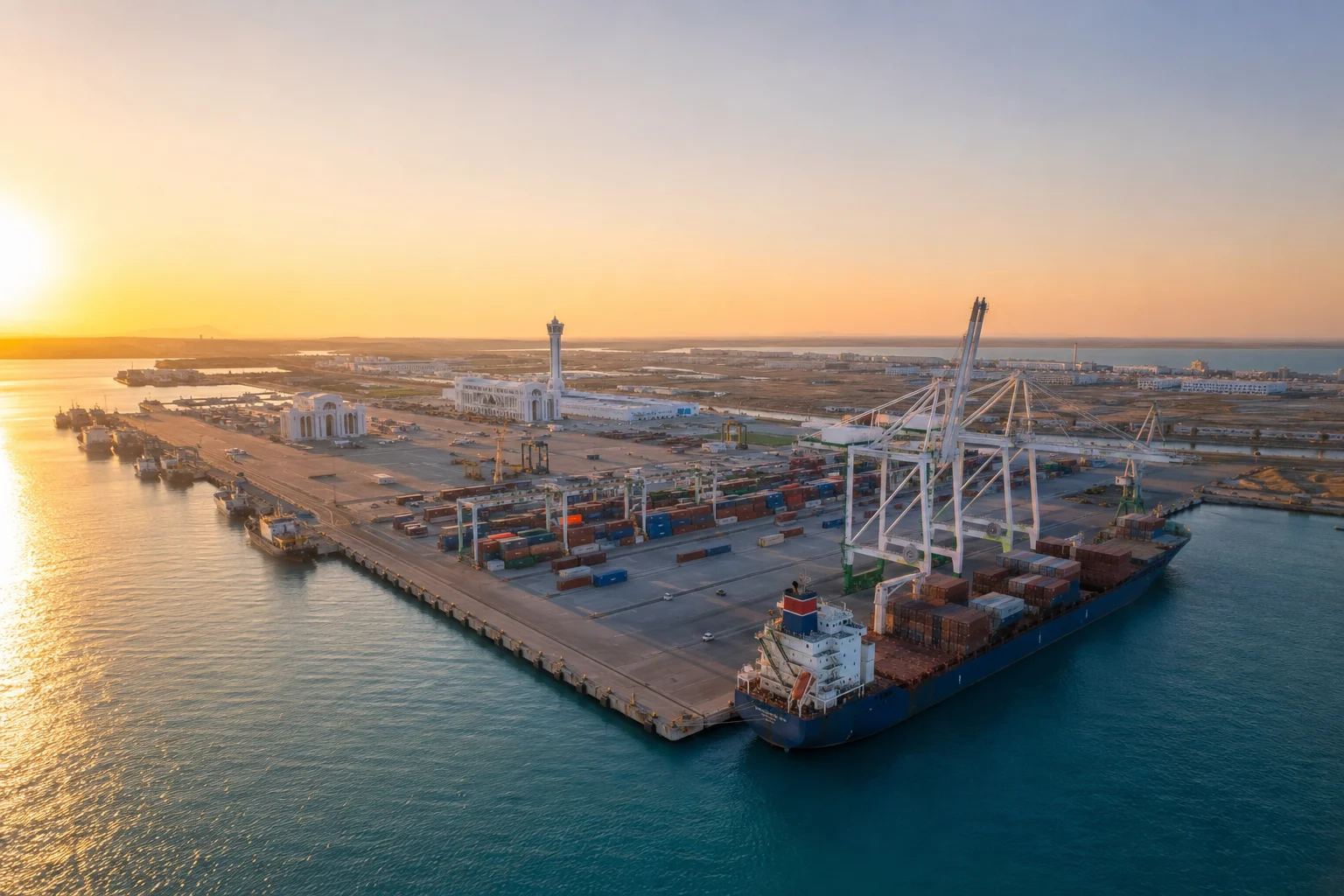
- Seaport: The modernised Turkmenbashi International Seaport on the Caspian Sea, significantly enhancing maritime logistics capacity
- Air freight for high-value or time-sensitive garment shipments via Ashgabat International Airport
Sustainability Practices in Turkmen Textile Exports
Sustainability has become a non-negotiable dimension of global textile procurement. Turkmenistan’s textile sector is actively advancing along this trajectory, with several initiatives of direct relevance to international B2B buyers.
Water Management Modernisation
Textile wet processing is water-intensive. Enterprises across Turkmenistan are implementing closed-loop water recycling systems and upgrading effluent treatment infrastructure to meet progressively higher environmental benchmarks.
Energy Efficiency Programs
State-supported programs encourage investment in energy-efficient machinery and production scheduling optimisation, reducing the carbon footprint per unit of output — a metric increasingly scrutinised by European and North American importers.
Cotton Farming Practices
The Turkmen government has prioritised the transition toward more resource-efficient agricultural methods, including precision irrigation techniques and improved seed varieties that reduce water and chemical input per kilogram of cotton produced.
Certification Pathways
Several Turkmen textile enterprises are actively pursuing internationally recognised certifications, including:
- OEKO-TEX Standard 100 — testing for harmful substances in textiles
- ISO 14001 — environmental management systems
- GOTS (Global Organic Textile Standard) — for organic cotton product lines
These credentials are increasingly essential for accessing premium market segments in Western Europe and North America.
Why Source Turkmenistan Textile Exports? A B2B Perspective
For procurement professionals and trade intermediaries evaluating Central Asia as a sourcing region, Turkmenistan presents a compelling combination of fundamentals:
- Competitive pricing rooted in domestic raw material access and lower production overheads
- Integrated supply chain reducing complexity and improving lead time predictability
- Government-backed reliability — state support for the export sector creates institutional stability for long-term supply agreements
- Quality trajectory — ongoing investment in machinery, training, and certification is measurably improving output standards
- Strategic geography — positioned at the intersection of Central Asia, the Caspian, and key routes to both European and Asian markets